Edgewater IL Locksmith Service Team
Local locksmith team
Apr 22, 2026 10 min read

Running a storefront or office in Chicago means juggling a hundred priorities at once — inventory, staff, lease renewals, foot traffic. Security often gets attention only after something goes wrong. But a methodical walk-around of your doors, locks, and access hardware can close gaps before a break-in, a lost master key, or a jammed panic bar forces the issue. This checklist is written for business owners along corridors like Broadway in Edgewater, the Magnificent Mile's side streets, or any neighborhood strip mall where a single compromised door can cost far more than a lock upgrade ever would.
The core of any commercial door audit is the mortise lock — the heavy, cartridge-style mechanism recessed into the door edge that is standard on Chicago storefronts, office suites, and multi-tenant buildings. Unlike a simple cylindrical knob lock bolted through a door, a mortise lock integrates the latch, deadbolt, and often a thumb-turn into one fortified unit. Understanding what you have — and whether it is up to the job — is the starting point for everything else on this list.
## Start at the Mortise Lock: What to Inspect and Why It Matters
Walk up to your front door and look at the lock hardware set into the edge of the door itself. If you see a rectangular metal pocket — rather than a cylindrical hole with a knob lock — you have a mortise lock. This is good news: mortise locks are harder to kick in, more resistant to picking, and built to handle the heavy daily cycling that commercial doors take. But age and wear are real concerns. Examine the face plate (the metal strip on the door edge) for cracks, stripped screws, or misalignment. A plate that sits proud of the door edge or wobbles when you wiggle the cylinder means the lock body has shifted — possibly because of a swollen door frame, a forced-entry attempt, or simple wear. If the cylinder turns sluggishly or the latch sticks, the internal cam mechanism may be worn. These are not cosmetic issues: a sticky latch can prevent the door from latching fully, defeating the deadbolt entirely.
Also inspect the strike plate on the door frame — the metal cup the latch seats into. Commercial strike plates should be secured with screws at least 3 inches long that bite into the structural framing behind the drywall, not just the door jamb casing. A strike plate held by short screws is the single most common failure point in a forced-entry scenario. While you are there, check the gap between door and frame: if you can slide a credit card into the latch gap, the door needs adjustment or an upgraded latch guard (a reinforcing strip that covers that gap). A professional commercial locksmith can assess whether your current mortise lock needs a cylinder re-key, a full lock replacement, or simply a strike plate upgrade — often a surprisingly impactful fix.
## Panic Bars, Door Knob Locks, and Secondary Hardware — Don't Skip the Back Door
Panic bars (also called crash bars or exit devices) are required by Chicago fire and building codes on most commercial occupancy doors that serve as emergency egress. They must push open from the inside under body pressure alone — no fumbling with keys during an evacuation. Test yours monthly: push firmly with your hip at the center of the bar. The latch should retract cleanly, the door should swing freely, and the bar should spring back to position when released. A panic bar that requires a hard shove, makes a grinding noise, or has visible cracks in the mounting bracket needs service immediately. Beyond the life-safety angle, a malfunctioning panic bar is also an invitation to someone who knows it will stick when employees are rushing to close up at night.
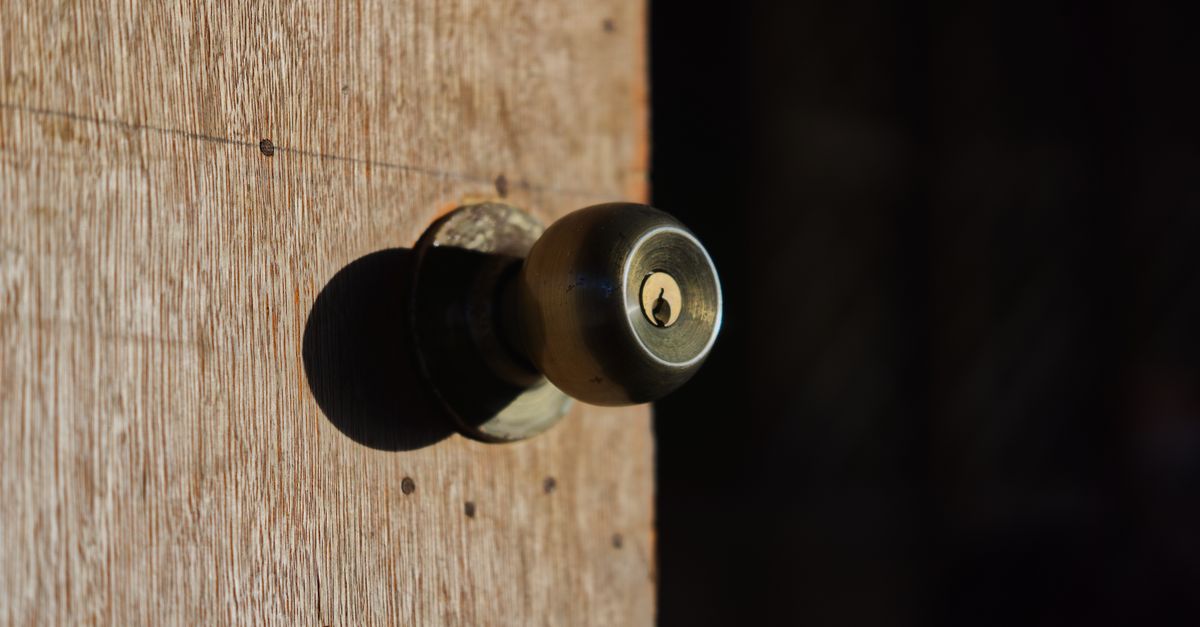
Equally important — and frequently overlooked — is the back or side door. Many Chicago storefronts, especially in older Edgewater and Rogers Park buildings, have rear alley doors that get propped open during deliveries and secured only with a door knob lock or a dead latch. A door knob lock alone is not adequate for an exterior commercial door; the round knob cylinder can be gripped and torqued in ways a lever or mortise setup resists. Consider upgrading rear and side doors to a heavy-duty cylindrical deadbolt at minimum, or ideally to a surface-mounted vertical rod device that reinforces the full door height. While you are auditing secondary doors, check hinges for loose pins and confirm the door frame is not rotted or soft — a solid lock on a deteriorated frame is security theater.
## Master Key Systems: The Mortise Lock Audit You Cannot Afford to Skip
A master key system lets a building owner or manager open every suite with one key while tenants hold keys that open only their own space. It is efficient — until a master key goes missing. If your business uses a master key hierarchy and a key is lost or an employee is terminated without returning their key, every lock in the system is potentially compromised. The solution is not simply changing one lock; it means re-keying the entire master key system so that the old master and sub-master keys no longer work. Experienced commercial locksmiths do this without replacing all your hardware — the mortise lock cylinders are pulled, re-pinned to a new key combination, and reinstalled, usually in a single visit.
Before a key goes missing, document your system. Keep a log of who holds each key, the key code cut on each copy, and when copies were made. Restrict key duplication by having your locksmith install 'do not duplicate' stamped keys or — for tighter control — a restricted keyway that requires authorization to copy. High-security cylinder options compatible with most commercial mortise locks are available and provide an added layer of protection that a hardware store key copy cannot replicate. If your building is on a busy commercial street like Clark Street or Sheridan Road, where tenant turnover is frequent, scheduling an annual re-key is a genuinely practical habit rather than an abundance of caution. If you need guidance on the right system for your building, our team is happy to walk you through the options — call (773) 832-5820 and we can assess your setup.
## Emergency Locksmith Preparedness: Planning Before a Crisis Hits
Every Chicago business owner should have a plan for three scenarios: a lockout (employee locked out after hours or key broken in the lock), a lock failure (cylinder seized, door won't close), and a security breach (break-in attempt, lock visibly damaged). For each scenario, know who to call and where the spare keys — or emergency contact information — are stored. A 24/7 emergency locksmith can respond to any of these situations, but having a vetted contact saved in your phone before an incident means you are not searching online at 2 a.m. after a distressing discovery. Our team serves the full Chicago area around the clock, from Edgewater to the Loop to Pilsen, and we arrive in a marked, fully equipped mobile unit.
On the question many business owners ask — how much does a locksmith cost in Chicago, or how much should an emergency locksmith cost — the honest answer is: it depends on several specific factors. The type of lock involved (a standard door knob lock re-key is a different scope than a full mortise lock replacement), the time of day (overnight and weekend calls involve after-hours rates), the distance our technician travels to your location, and any parts needed all factor into the final quote. What we commit to is providing you with a confirmed, exact price before any work begins — no surprise charges on the invoice. When you call us, we gather those details and give you a straight number up front.
## A Complete Chicago Commercial Locksmith Services Reference
A security audit is only as useful as the follow-up services available to act on what you find. Whether your walk-around turns up a worn mortise lock cylinder, a panic bar in need of adjustment, or a master key system overdue for a re-key, our team covers the full range of commercial, residential, and automotive locksmith needs across the Chicago area. Here is a specific rundown of what we handle:
Commercial services: Mortise lock installation and replacement — Mortise lock cylinder re-keying — Master key system design and re-keying — Panic bar / exit device installation, adjustment, and repair — Commercial grade deadbolt installation — Door knob lock replacement and upgrade — High-security restricted keyway systems — Access control keypad and electronic lock installation — Lock-out response for offices and storefronts — Door closer adjustment and replacement — Storefront door lock repair — Safe installation and combination change — File cabinet and desk lock service — Padlock and hasp installation — Mailbox lock replacement. Residential services: House lockout response — Residential deadbolt installation — Schlage and Kwikset smart lock setup — Sliding door and window lock installation — Re-key after move-in or key loss — Gate lock installation. Automotive services: Car lockout response — Broken key extraction from ignition or door — Transponder key programming — Key fob replacement and programming — Ignition cylinder repair — Duplicate car key cutting. Emergency locksmith services: 24/7 lockout response for homes, businesses, and vehicles — Broken lock emergency repair — Post-break-in lock replacement — Urgent re-key after security breach. Every call starts with a confirmed price before work begins, and we carry parts for a wide range of lock brands so most jobs are completed in a single visit.
Frequently asked questions
How much does a locksmith cost in Chicago for a commercial job?+
There is no single flat rate because several variables shape the final price: the type of hardware involved (a door knob lock re-key differs from a full mortise lock replacement), whether the call is during standard hours or overnight, the travel distance to your location, and any parts or cylinders required. What we always do is confirm an exact price before starting any work, so you know the full cost before a single screw is turned. Call (773) 832-5820 to describe your situation and get a straight quote.
How much should an emergency locksmith cost — is an after-hours call significantly more expensive?+
After-hours, overnight, and weekend calls do typically carry a higher rate than standard daytime service, which reflects the real cost of keeping a technician available around the clock. The honest approach is to ask about the after-hours rate when you call — we will tell you the exact amount before any work begins. Emergency locksmith pricing varies based on the same factors as any other call: lock type, parts needed, and travel distance. We never add surprise fees after the job.
How do I find a reputable locksmith in Chicago — what should I look for?+
Look for a locksmith who arrives in a marked vehicle, carries professional tools, asks to verify your ownership or authorization before working on a lock, and provides a written or clearly stated price before beginning. A reputable locksmith will never refuse to give you a price estimate in advance. Our team is insured, experienced with both residential and commercial hardware including mortise locks and exit devices, and available 24/7. You can reach us directly at (773) 832-5820 — we are a local Chicago operation, not a call-center dispatch service.
Can a locksmith re-key a mortise lock without replacing the entire lock body?+
Yes — in most cases. A skilled locksmith can remove the cylinder from a mortise lock, re-pin it to a new key, and reinstall it, leaving the expensive lock body and all associated hardware in place. This is both faster and more cost-effective than full replacement and is the standard approach for master key system changes or post-employee-termination security updates. If the lock body itself is damaged or worn, replacement may be the better long-term call, and we will walk you through that assessment honestly.